
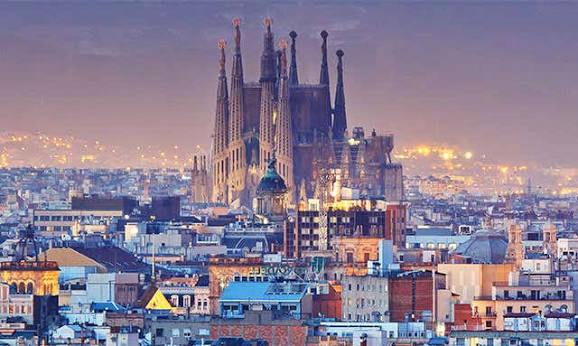
On February 20, 2026, a crane hoisted a massive cross onto the summit of the Tower of Jesus Christ. After 144 years of construction, the Sagrada Familia — Antoni Gaudí’s unfinished masterpiece — had finally become the tallest church in the world, soaring to 172.5 metres (566 feet). Then, on June 10, 2026, exactly 100 years after Gaudí’s death, Pope Leo XIV stood before the completed tower, sprinkled holy water, and blessed the basilica in a ceremony that drew global attention. Fireworks illuminated the Barcelona skyline. The world watched. History was made.
But if you think the Sagrada Familia story ends there, you haven’t been paying attention.
A Masterpiece That Refuses to Be Rushed
The Sagrada Familia’s story began in 1882, when a devout association broke ground on a neo-Gothic church in Barcelona’s Eixample district. A year later, a 31-year-old architect took over the project. His name was Antoni Gaudí, and he would spend the next four decades of his life utterly consumed by a vision that defied every architectural convention of his time.
Gaudí transformed the project into something the world had never seen. He abandoned straight lines — famously declaring that “there are no straight lines in nature” — and instead filled the basilica with organic curves, hyperboloid vaults, and towering spires that seem to grow from the earth like stone trees. He designed 18 towers: 12 for the apostles, 4 for the evangelists, one for the Virgin Mary, and the tallest of all for Jesus Christ. He knew he would never live to see it finished. When asked how long the project would take, Gaudí reportedly replied: “My client is not in a hurry.”
When Gaudí was struck by a tram and died in 1926, the Sagrada Familia was barely a quarter complete. What followed was a century of interruptions: the Spanish Civil War destroyed many of Gaudí’s original plans and models; decades of slow reconstruction followed; and through it all, the basilica kept rising, decade after decade, generation after generation.
2026: The Year the Miracle Finally Happened
For anyone who has followed the Sagrada Familia‘s journey, 2026 has always been a date circled on the calendar. This year marks not only the completion of the Tower of Jesus Christ but also the centenary of Gaudí’s death — making it the most significant year in the basilica’s history.
And the world has taken notice. The Sagrada Familia already welcomes over 4 million visitors annually, making it one of Europe’s most visited attractions. In 2026, with the tower finally complete and the “Gaudí Year” celebrations in full swing, visitor numbers are expected to soar even higher. The city has already seen a surge in hospitality and commerce around the basilica.
For those planning to witness this historic moment in person, the advice from travel experts is clear: book your tickets four to six weeks in advance. This isn’t a suggestion — it’s a necessity.
When to Go: A Visitor‘s Guide to 2026
So you’ve decided to visit. Now comes the harder question: when?
Spring (April–June) is widely considered the best time to visit. Temperatures hover between 15°C and 22°C, sunny days are increasingly common for optimal light effects inside the basilica, and crowds are more manageable than during the summer peak. May and September are particularly recommended for the best balance of light and mild weather.
Autumn (September–October) offers a smart alternative. The weather remains warm but not hot, crowds begin to thin after the summer rush, and ticket prices become more reasonable. The golden autumn light filtering through the stained glass creates truly magical interior scenes.
Winter (November–February) is the quiet option. Fewer tourists, easier ticket availability, and beautiful midday light — just be aware of shorter opening hours (9:00 AM to 6:00 PM).
Summer (June–August) is best avoided if possible. It‘s the most crowded and hottest time of year. If you must go, book at least two weeks in advance and visit early morning or after 4:00 PM.
As for the best days: Tuesday and Wednesday are the quietest, while weekends are packed — Sundays are particularly busy due to international mass.
The Controversy No One Wants to Talk About
Here’s the uncomfortable truth that the fireworks and papal blessings can‘t掩盖: the Sagrada Familia is still not fully finished.
The Glory Façade — the grand main entrance that Gaudí envisioned as the basilica’s crowning glory — remains unbuilt. And the current plan for its construction involves demolishing up to 400 homes in the surrounding neighbourhood. Some estimates put the number of affected residents as high as 1,000 across two city blocks.
The project would create a monumental staircase and plaza in front of the church‘s main entrance. But the residents of the Sagrada Familia neighbourhood are fighting back. The key questions are simple but explosive: How many residents will be displaced? Where will they be rehoused? How will they be compensated?
The Barcelona City Council has not yet set a timetable for a final decision. But the longer this lingers, the more it threatens to tarnish what should be a moment of celebration.
A City Divided
The controversy has split Barcelona in two.
For the Catholic Church and millions of visitors, the Sagrada Familia is a sacred, architectural wonder — a UNESCO World Heritage site that draws millions of pilgrims and tourists every year.
For many locals, it is the symbol of a housing crisis.
Barcelona has been ground zero for Europe’s anti-overtourism movement. In 2024, locals took to the streets to protest the city‘s surging visitor numbers. The Sagrada Familia’s completion has only amplified those fears. Local residents worry that the basilica‘s completion will pour fuel on the overtourism fire.
What’s Next?
The Tower of Jesus Christ is now complete, and the interior is expected to be finished by 2028. But the full completion of the basilica — including the Glory Façade, the grand staircase, and all decorative elements — is currently projected for around 2035.
For the construction team, the work continues. For the residents of Barcelona, the fight continues. For the rest of us, the Sagrada Familia‘s story is far from over.
Why This Matters Beyond Barcelona
The Sagrada Familia is more than just a building. It’s a testament to human persistence — a reminder that some visions are too big to be completed in a single lifetime. Gaudí knew he would never see his masterpiece finished, and yet he poured every ounce of his genius into it anyway. That kind of faith — in an idea, in a vision, in future generations — is increasingly rare in our world of instant gratification and quarterly results.
But the Sagrada Familia is also a cautionary tale. It asks uncomfortable questions about what we‘re willing to sacrifice in the name of art and tourism. Is a monumental staircase worth displacing a thousand people? Can a city celebrate an architectural triumph while its residents struggle with housing affordability? These aren’t easy questions, and Barcelona doesn‘t have easy answers.
Plan Your Visit
If you’re inspired to see the Sagrada Familia for yourself — and you absolutely should be — here‘s what you need to know:
- Book tickets 4–6 weeks in advance for 2026 visits
- Visit on a Tuesday or Wednesday for the quietest experience
- Choose spring or autumn for the best balance of weather, light, and crowds
- Arrive early morning or late afternoon for the most dramatic light through the stained glass
- Check for updated visitor information before you go
For more travel inspiration, explore additional resources on Bloomwik Hub, a curated collection of travel, fashion, and lifestyle content. You can also dive deeper into detailed travel guides on Penzu, which offers practical insights for planning your Barcelona adventure. For a broader perspective on 2026‘s most unforgettable destinations, the Four Unforgettable Trips for 2026 guide covers Barcelona alongside Tokyo, Victoria Falls, and Copenhagen. For development and technical resources, check out JSFiddle for coding experiments, or connect with the community on Myspace. For more travel insights, visit Henry’s Ameba Blog, or explore the Bloomwiz Hub for transformative journey experiences. The Bloomwell Journal offers thoughtful stories on culture, travel, and modern life. For visual inspiration, browse Pinterest or explore high-quality images on Pixabay. You can also find curated travel links on Linktree, Hoo.be, and Bio Sites. For the full story on the 2026 milestone and its implications, read the complete Sagrada Familia 2026 analysis.
The Final Word
The Sagrada Familia is finally the world‘s tallest church. But behind the celebrations, a battle over Barcelona’s housing and tourism is just beginning. The cross now sits atop the Tower of Jesus Christ, 172.5 metres above the Barcelona streets. Gaudí‘s vision has reached the heavens. But on the ground, the people of Barcelona are still fighting for their homes, their neighbourhoods, and their city’s soul.
That‘s the real story of the Sagrada Familia in 2026. Not just a building that was finished — but a city that’s still being built, block by block, argument by argument, dream by dream. And in that sense, maybe the Sagrada Familia was never meant to be finished at all. Maybe it was always meant to be a work in progress — just like the city it calls home, and just like all of us who come to marvel at its impossible beauty.Makesure to also checkout what to dress when visiting Sagrada Familia.